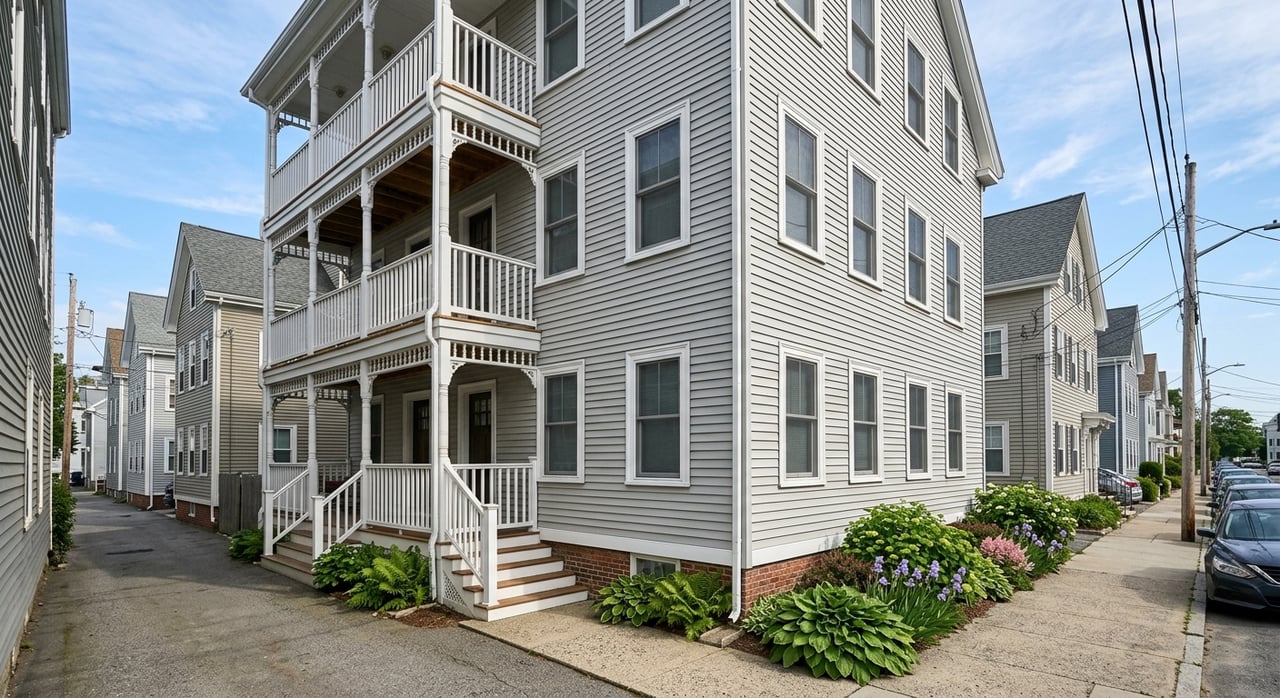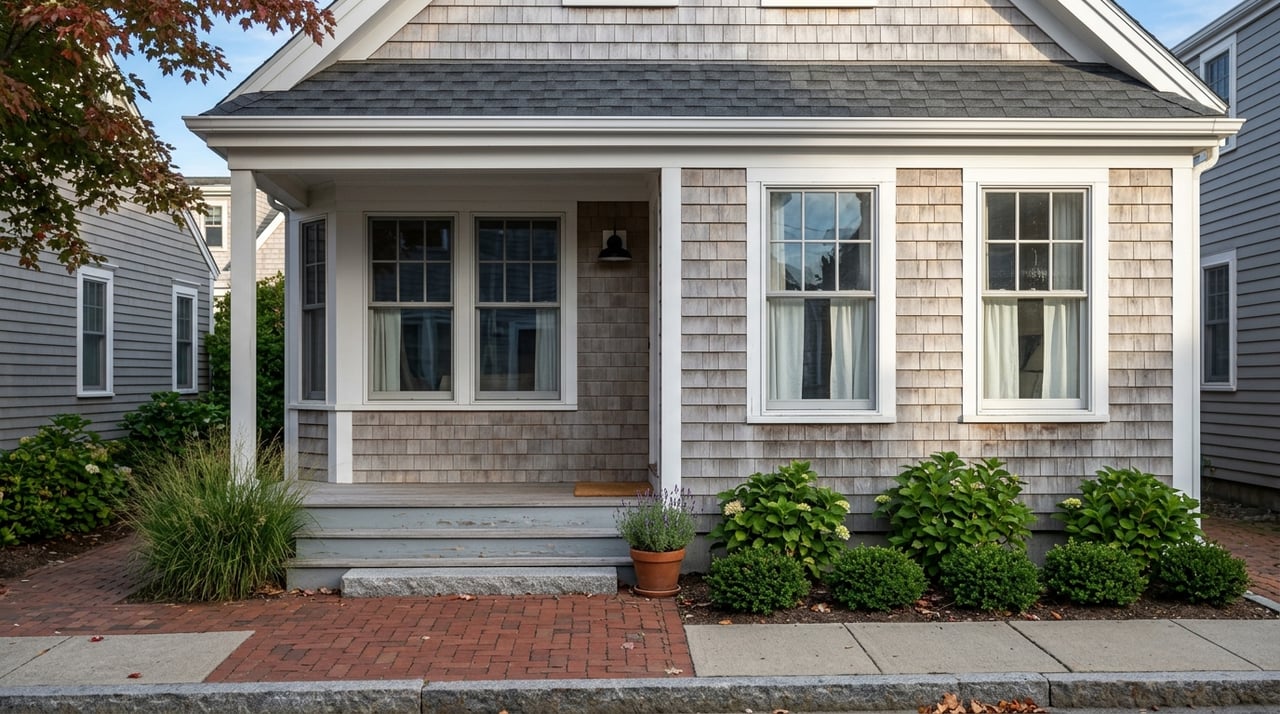
Looking at a duplex in New Bedford or a small apartment in Fall River and wondering if the price makes sense? If you buy or sell 2-4 units or small apartments in Bristol County, you need a simple way to compare deals. Cap rate helps you do that quickly and with discipline. In this guide, you will learn what cap rate means, how to calculate it step by step, which local inputs matter most, and how to use it with confidence. Let’s dive in.
Cap rate basics
Cap rate is a snapshot of an income property’s unlevered return. It answers a simple question: if you paid cash today, what annual return would the property’s operations produce?
- Formula: Cap rate = Net operating income (NOI) ÷ Purchase price.
- NOI includes recurring income (rent and other income) minus operating expenses. It excludes mortgage payments, income taxes, and depreciation.
- It is useful for comparing income properties on the same basis.
- Cap rate does not show financing effects, timing of cash flows, or appreciation. Use cash-on-cash, IRR, or debt coverage ratio for deeper analysis.
Calculate cap rate
Follow these steps to build a clean, repeatable cap rate:
Compile gross scheduled income (GSI). Start with the current rent roll. Add other income such as laundry, parking, or pet fees. If a unit is far below or above market, note a “market rent” version for comparison.
Estimate vacancy and credit loss. For small multifamily in Bristol County, a stabilized allowance of about 4 to 8 percent is common, depending on submarket and condition. Use recent local comps to refine.
Compute effective gross income (EGI). EGI = GSI minus vacancy allowance plus other income.
Sum operating expenses. Include property taxes, insurance, owner-paid utilities, repairs and maintenance, management, landscaping, legal and accounting, advertising, supplies, and reserves. Be consistent across deals.
Calculate NOI. NOI = EGI minus operating expenses. Do not subtract mortgage payments.
Compute cap rate. Cap rate = NOI ÷ purchase price. Always state whether you are using current, market, or stabilized NOI.
Gather local inputs
Local numbers drive cap rate accuracy. Here is where to look in Bristol County:
- Property taxes. Check the municipal assessor’s office for your city or town, including New Bedford, Fall River, Taunton, Attleboro, Dartmouth, Fairhaven, Westport, and Somerset. Use the current assessed value and tax rate to estimate the bill.
- Market rents and vacancy. Review local MLS rental data and listing portals to cross-check per-unit rents and small apartment asking rents. Compare rent rolls from recent sales where available.
- Insurance. Request quotes from local insurance brokers who handle small multifamily on the South Coast. Coastal exposure near Narragansett Bay or Buzzards Bay can raise premiums and may require flood coverage. Verify flood zones using FEMA maps.
- Utilities and municipal fees. Confirm with the town or utility providers how water, sewer, trash, gas, and electric are billed. Some towns bill water and sewer quarterly or through municipal meters.
- Maintenance and reserves. Ask local contractors or property managers for realistic budgets, especially for older buildings that may need roofs, boilers, exterior paint, or lead paint compliance work.
- Financing environment. Expect 2-4 unit buildings to qualify for residential financing for owner-occupants, while 5 or more units usually require commercial loans with different underwriting.
- Comparable sales. Pull sold data from the MLS and the county registry of deeds. Where possible, estimate sale cap rates by dividing NOI by sale price.
Expense ratios to expect
Expense ratio equals operating expenses divided by EGI. It is a quick way to sense whether your expense load is in a normal range for the asset type.
- 2-4 unit buildings: often 30 to 45 percent. Owner-occupants may self-manage, but per-unit repairs and turnover can be higher.
- Small apartments (5-50 units): often 35 to 50 percent. Larger buildings can gain some scale on management and maintenance, but may carry higher utility or amenity costs.
Key line items to watch:
- Property taxes. One of the largest expenses. Get the actual bill or verify the assessed value and rate with the assessor.
- Insurance. Varies based on age, construction, coastal exposure, and claims history. Flood risk can add coverage requirements and cost.
- Utilities. Older heating systems and owner-paid water or hot water can push expenses up.
- Repairs and reserves. Plan both routine maintenance and periodic capital items. As a starting point, many investors model 5 to 10 percent of EGI for reserves, then adjust for age and condition.
- Management. Owner-managed can be 0 to 5 percent of EGI. Professional management for small portfolios often runs 6 to 10 percent.
Local factors in Bristol County include older building stock and potential flood exposure. Both can raise insurance, maintenance, and reserve needs.
Bristol County examples
These simple examples show how the math works. Replace the inputs with verified local data for your deal.
Example A: 2-unit building
- Assumptions: purchase price $350,000; rents $1,400 and $1,300 per month, other income $600 per year; vacancy 5 percent.
- GSI = $32,400 per year. EGI = $32,400 + $600 − $1,620 = $31,380.
- Expenses: taxes $4,200; insurance $1,200; utilities $1,800; repairs $3,000; management $0 (owner-managed); reserves $2,000; misc $500. Total = $12,700.
- NOI = $31,380 − $12,700 = $18,680.
- Cap rate = $18,680 ÷ $350,000 = 5.34 percent.
- Interpretation: on a cash basis, this yields about 5.3 percent annually before financing.
Example B: 12-unit small apartment
- Assumptions: purchase price $1,200,000; average rent $1,100 per unit per month; other income $3,600 per year; vacancy 6 percent.
- GSI = $158,400 per year. EGI = $158,400 + $3,600 − $9,504 = $152,496.
- Expenses: taxes $24,000; insurance $6,000; utilities $12,000; repairs $18,000; management 6 percent of EGI ≈ $9,150; reserves $12,000; misc $1,500. Total ≈ $82,650.
- NOI = $152,496 − $82,650 = $69,846.
- Cap rate = $69,846 ÷ $1,200,000 = 5.82 percent.
- Interpretation: this shows a mid-5 percent cap rate on the assumptions above.
Stress-test sensitivity
Small changes in assumptions can move your cap rate more than you expect. Use quick scenarios to see your risk.
- Vacancy swing on Example A. A 2 percent vacancy increase equals 0.02 × $32,400 = $648 less EGI. New NOI ≈ $18,032. Cap rate ≈ $18,032 ÷ $350,000 = 5.15 percent. A 2 percent vacancy decrease raises NOI to about $19,328 and cap rate to 5.52 percent.
- Expense swing on Example A. Adding a professional manager at 5 percent of EGI is about $1,569. New NOI ≈ $17,111. Cap rate ≈ 4.89 percent. Removing owner-paid utilities or lowering insurance can have the opposite effect.
- Property tax change. If taxes rise by $420 on Example A, NOI falls by the same $420 and cap rate drops by about 0.12 percentage points.
The lesson: verify taxes and insurance early, and model vacancy and expense ranges before you write an offer.
Use cap rate wisely
Cap rate works best when you compare apples to apples.
- Keep assumptions consistent. Use the same vacancy rate, the same expense categories, and a clear reserve policy across every deal you compare.
- Show current vs stabilized. If units are under-rented or the building needs rehab, show an as-is cap rate and a stabilized cap rate with the rent-up and expense changes.
- Adjust for local risk and upside. If a property has deferred maintenance, either reduce the price or include rehab costs in your pro forma. If rent growth prospects are strong, a lower entry cap rate can still pencil.
- Pair with other metrics. Use cash-on-cash for leveraged purchases, debt coverage ratio for lender comfort on 5-plus unit deals, and IRR for total return planning.
- Size reserves realistically. Older South Coast buildings often need higher reserves. Budget conservatively to avoid surprises.
Due diligence checklist
Before you rely on a cap rate, verify the inputs:
- Current rent roll, leases, and last 12 months profit and loss.
- Utility bills and municipal water or sewer statements.
- Current property tax bill and assessed value from the assessor.
- Insurance declarations and updated quotes, including any flood requirements.
- Maintenance records, turnover history, and any eviction history.
- Building inspection and near-term capital needs for roofs, boilers, HVAC, and exterior work.
- Recent sold comps from MLS and the registry of deeds, with sale cap rates where possible.
Build a comparison sheet
Set up a simple spreadsheet so you can line up multiple properties side by side:
- Address and unit count
- Purchase or offer price
- GSI by unit and other income
- Vacancy allowance percent and dollars
- EGI
- Property tax, insurance, utilities
- Repairs and maintenance, management fee, reserves, other expenses
- Total operating expenses
- NOI and cap rate
- Stabilized NOI and cap rate after rent-up or rehab
- Cash-on-cash scenarios if financing: loan amount, interest rate, amortization, annual debt service, and cash flow after debt service
- Notes on condition, comps, flood zone, lead paint, or deferred maintenance
Work with a local pro
A clean cap rate is the start, not the finish. The best outcomes come from verified local inputs, honest reserve planning, and a realistic plan for rent-up or rehab. If you want help pulling tax bills, stress-testing expenses, or pricing an offer with both as-is and stabilized NOI, you can lean on a local operator-broker who does this daily.
If you are buying, selling, or repositioning small multifamily in Bristol County, reach out to Zach Midwood for practical underwriting and a clear path to closing.
FAQs
What is cap rate in real estate?
- Cap rate is NOI divided by price and shows the annual unlevered return a property’s operations would generate if you paid cash.
How do I calculate NOI for cap rate?
- Start with rent and other income, subtract a vacancy allowance to get EGI, then subtract operating expenses such as taxes, insurance, utilities, repairs, management, and reserves.
What is a good cap rate in Bristol County?
- It depends on the building, condition, location, and growth prospects, so compare similar properties with the same assumptions and review recent local comps.
Should I use current or market rents?
- Show both: calculate an as-is cap rate with current rents and a stabilized cap rate with realistic market rents and expense changes.
Do mortgage payments affect cap rate?
- No, cap rate ignores financing; use cash-on-cash return and debt coverage ratio to evaluate loans on 5-plus unit deals.
Why do taxes and insurance matter so much?
- They are large fixed costs in Bristol County and small changes flow straight through to NOI, which moves your cap rate.
How do flood zones affect underwriting on the South Coast?
- Flood exposure can require additional insurance and higher premiums, so confirm zone status and get quotes before finalizing your offer.