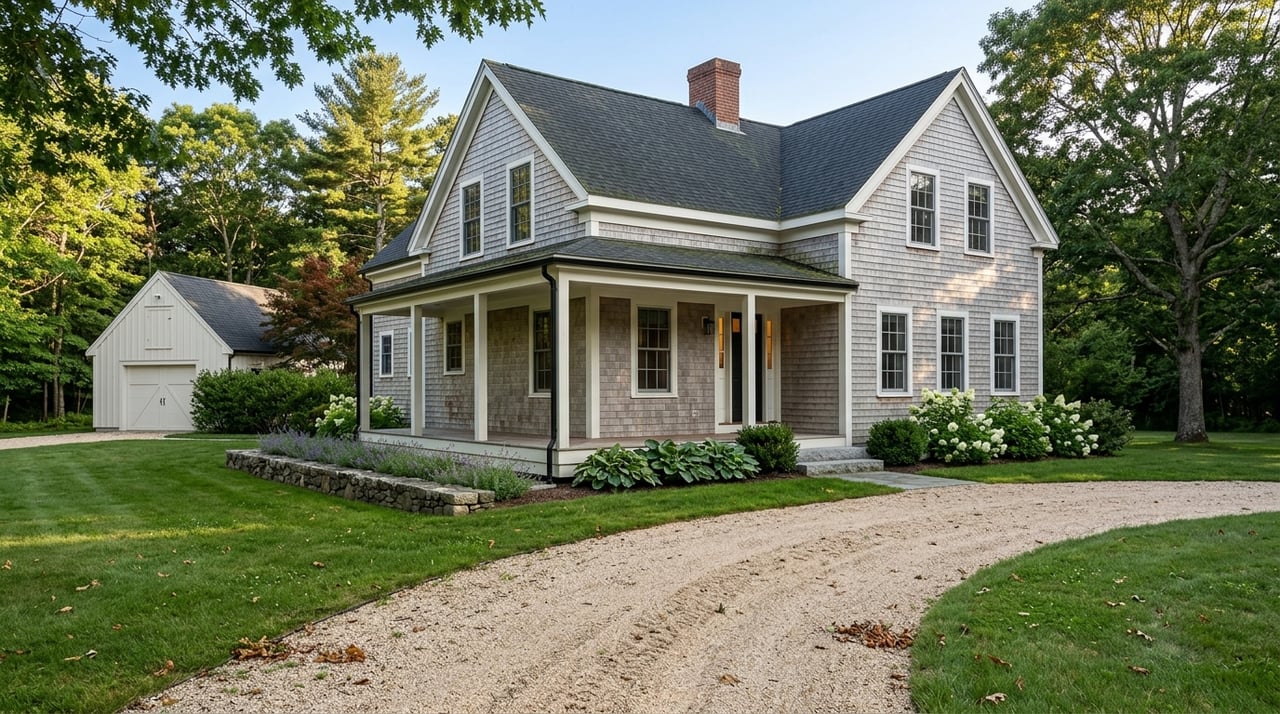
If you picture country living as more space, quieter roads, and room to spread out, Rochester may be one of the clearest fits on the South Coast. Buying here is not the same as buying in a denser suburb, and that matters when you start comparing homes, lots, utilities, and daily routines. This guide will help you understand what Rochester living actually looks like, what to expect from the housing stock, and which details to check before you buy. Let’s dive in.
Why Rochester Feels Rural
Rochester is a small town in Plymouth County with an estimated 5,936 residents spread across 33.57 square miles of land. The town describes itself as mostly rural-residential and a Right-to-Farm community, which helps explain why the overall feel is different from more built-up nearby markets.
That rural identity is not just branding. In the town master plan survey, residents said they most valued the agricultural setting, open space, forested landscape, safety, historic architecture, and local school quality. By contrast, proximity to major highways, employment centers, and local shopping ranked lower, which gives you a useful sense of what people prioritize here.
If you want a place where land, privacy, and open scenery shape everyday life, Rochester stands out. If you want a dense retail corridor, frequent public transit, or a more compact suburban pattern, this town may feel less convenient.
What Homes and Lots Look Like
Rochester’s housing pattern is shaped heavily by zoning and infrastructure. The Agricultural-Residential district covers 97% of the town’s land area, and the minimum lot size is generally 2 acres because of septic requirements.
That has a real effect on what you see in the market. Rochester tends to offer a low-density, privacy-oriented housing environment rather than a subdivision-heavy or apartment-heavy one. The lack of broad sewer and water infrastructure also limits smaller lots and a wider mix of housing types.
From a buyer’s point of view, that often means you should expect more land and more separation between properties. It also means two homes with similar square footage can live very differently depending on acreage, site layout, and utility setup.
Census data also points to a mostly homeowner-oriented market. Rochester has an 88.1% owner-occupied housing rate, with a median owner-occupied home value of $599,100 and a median gross rent of $1,432.
Open Space Is a Big Part of Life
One of Rochester’s strongest lifestyle advantages is how much open land surrounds the town. The master plan cites 5,066 acres of permanently protected open space, plus another 1,777 acres in Chapter 61, 61A, and 61B programs.
That scale matters because it helps preserve the setting buyers usually mean when they say they want country living. You are not just buying a house here. In many cases, you are also buying into a landscape shaped by conservation land, forests, wetlands, and agricultural uses.
Local recreation reflects that identity too. Residents highlighted walking and hiking among their favorite activities, and well-known local places in the town survey included Eastover Farms, Plumb Corner, Rochester Memorial School, and Gifford Park and Dexter Lane.
Rochester also offers trail access and recreation facilities through town land, the Rochester Land Trust, and private owners. Some local routes are relatively flat and easy, and nearby preserve options include short wooded loops through wetlands and conservation areas.
Daily Living in Rochester
Country living often comes with tradeoffs, and Rochester is no exception. The town offers core civic services such as town hall, police, post office, library, parks and recreation, highway, volunteer fire, council on aging, water, and cemeteries.
The Joseph H. Plumb Memorial Library serves as a community hub, and Rochester Memorial School anchors the local elementary school presence. These kinds of everyday institutions help give the town a strong local-center feel even though the development pattern is spread out.
At the same time, buyers should expect a lifestyle that depends more on driving for errands and services. Rochester is better understood as a rural town with civic basics and outdoor access, not a place built around dense commercial convenience.
Commuting Is Mostly Car-Based
If you are considering Rochester, transportation habits should be part of your decision early. The town’s road network primarily serves automobile drivers, and public transit options are limited.
I-495 crosses the northeast section of town, and I-195 crosses the south section. The master plan notes that congestion is not a major issue overall, but bicycle lanes and pedestrian infrastructure are limited.
Commute data reinforces the car-dependent pattern. About 90.9% of commuters use personal vehicles, 86.2% drive alone, 6.4% work from home, and just 0.2% use public transit.
Average commute time depends on the dataset, but the available figures place it between 31.2 and 36.5 minutes. In practical terms, Rochester can work well if you are comfortable with driving as a normal part of daily life.
The town is also very vehicle-oriented at the household level. According to the master plan, every household has at least one vehicle, while 46.6% own two vehicles and 44.3% own three.
Utilities and Infrastructure To Check Early
One of the biggest differences between buying in Rochester and buying in a more built-up area is property infrastructure. Most residents rely on private wells, while some roads connect to Marion or Wareham water service.
That means utility questions should move up your checklist. You will want to confirm the water source, septic setup, and any property-specific utility connections early in the process.
This matters because lot size, site conditions, and utility systems are tied closely together in Rochester. A home can look ideal online, but your comfort with the property may depend on how those behind-the-scenes systems are configured.
Broadband access is stronger than some buyers expect in a rural setting. Census figures show 98.1% of households report a computer and 95.7% report a broadband subscription, which can support remote work and day-to-day online needs.
Who Rochester Fits Best
Rochester tends to make the most sense for buyers who want space, privacy, and a landscape defined by open land and conservation. If your goal is a home with breathing room and a more rural rhythm, the town offers a compelling alternative to denser suburban markets.
It can also be a practical choice if you work remotely part of the week or do not mind a drive-based routine. With broad vehicle use, limited public transit, and spread-out development, Rochester rewards buyers who are comfortable planning daily life around the car.
On the other hand, the town may be a weaker fit if you want frequent transit, close-together shopping, or a shorter-commute suburban feel. Rochester’s own planning data and resident survey both point toward lifestyle priorities centered more on land and setting than on convenience density.
Smart Questions To Ask Before Buying
When you tour homes in Rochester, it helps to look beyond finishes and square footage. In a rural market, the land and systems can be just as important as the house itself.
Here are a few practical questions worth asking early:
- What is the lot size, and how usable is the land?
- Does the property rely on a private well or another water source?
- What type of septic setup serves the home?
- How much driving will your daily routine require?
- Is broadband available at the level you need for work or streaming?
- How close are the services and amenities you use most often?
A buyer who goes in with clear expectations usually makes better decisions here. Rochester is not trying to be everything to everyone, and that is part of its appeal.
Rochester Buyer Takeaway
Rochester offers a distinct version of South Coast country living. Its low-density zoning, large amount of protected open space, and mostly car-based routine create a setting that feels rural in a real, everyday way.
For the right buyer, that can be a major advantage. You may get the space, quiet, and privacy that are harder to find in more compact markets, but you should go in with a clear understanding of infrastructure, commuting, and property-specific systems.
If you want a practical read on whether a Rochester property fits your lifestyle, budget, and long-term plans, Zach Midwood can help you sort through the details and buy with a clear plan.
FAQs
What kind of housing should you expect in Rochester, MA?
- Rochester is mostly a low-density, homeowner-oriented market with larger lots, strong single-family presence, and fewer smaller-lot or apartment-style options due to zoning and infrastructure limits.
What makes Rochester, MA feel like country living?
- Rochester’s rural-residential character, Right-to-Farm identity, large amount of open space, forested land, and agricultural setting all contribute to a country-living feel.
How important is driving when living in Rochester, MA?
- Driving is a major part of daily life in Rochester because most commuters use personal vehicles, public transit options are limited, and the road network is designed mainly for cars.
What utility issues should buyers check in Rochester, MA?
- Buyers should confirm whether a home uses a private well, review the septic setup, and verify any property-specific utility connections early in the process.
Is Rochester, MA a good fit for remote workers?
- Rochester can work well for some remote workers because broadband use is common in town, though buyers should still confirm service details for any specific property.
Who is the best fit for country living in Rochester, MA?
- Rochester is often the best fit for buyers who want more land, privacy, conservation surroundings, and a quieter rural lifestyle rather than dense shopping or transit access.