If you are deciding between a single-family rental and a small multifamily property in Plymouth County, the right answer usually comes down to one thing: what kind of investor do you want to be? In this market, high home prices, varied submarkets, and tighter cash flow can make that choice more important than it first appears. If you understand how financing, rents, and day-to-day ownership differ, you can make a smarter move with fewer surprises. Let’s dive in.
Plymouth County investing starts with market reality
Plymouth County is not a cheap market. Census data shows a 2020-2024 median owner-occupied home value of $556,000, while current market trackers place the median sale price closer to $622,000. At the same time, the Census reports median gross rent at $1,747, and current market rent is often around $2,700 to $2,800 per month.
That gap matters. When prices are high relative to rents, cash flow can feel tight, especially on a one-unit rental. In many Plymouth County deals, investors rely more on long-term appreciation, loan paydown, and selective rent growth than on strong day-one yield.
The county also has a 77.6% owner-occupied housing rate, which tells you a lot about the local housing mix. Detached homes are the default in many areas, while 2-4 unit properties tend to be a more specialized play. That creates a market where single-family often has broader appeal, but small multifamily can offer a different kind of upside.
Plymouth County is not one uniform rental market
One mistake investors make is treating the whole county like a single market. It is not. State housing data and HUD rent schedules show that Plymouth County is split across different rent geographies, including a Brockton-area grouping and a Boston-Cambridge-Quincy grouping.
That means a property in Brockton-side towns such as Abington, Bridgewater, Brockton, or Whitman may underwrite differently than a property in towns like Plymouth, Marshfield, Scituate, or Hingham. Rent ceilings, entry prices, and tenant demand can vary by submarket. If you are comparing single-family and multifamily options, you need to compare them town by town, not just countywide.
Why single-family feels simpler
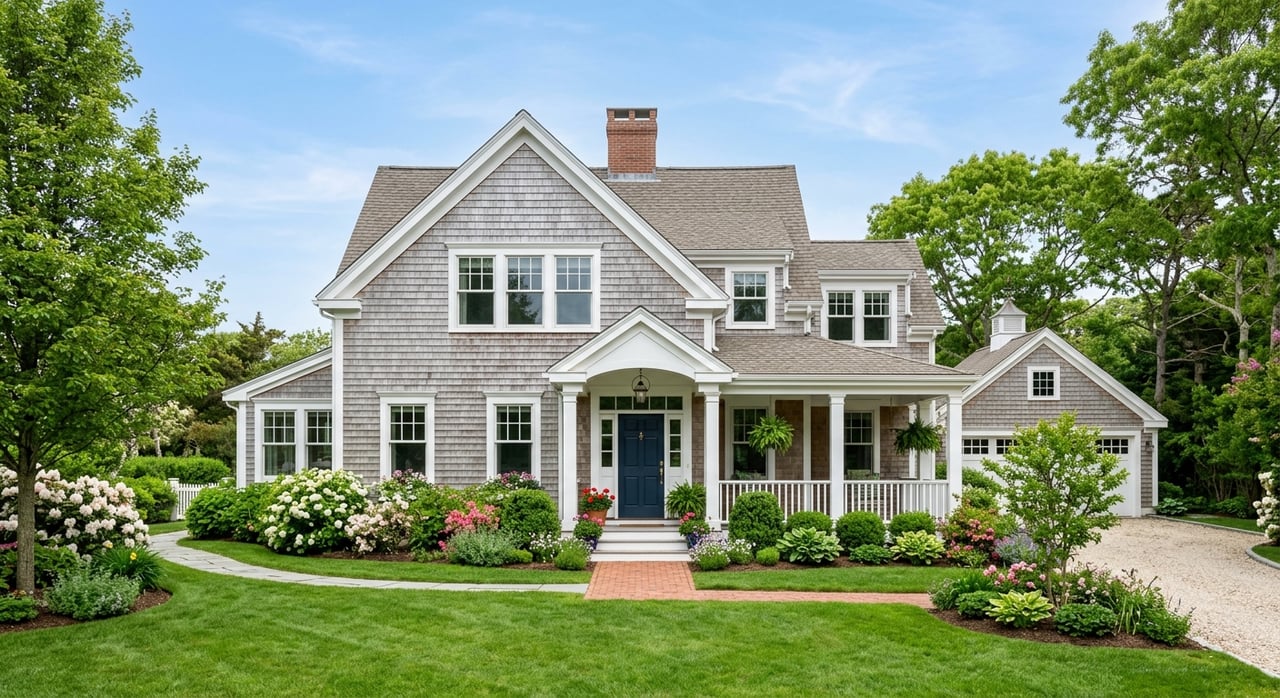
For many buyers, single-family is the cleaner entry point. You usually have one tenant, one kitchen, one set of utilities to track, and a much easier ownership structure. In a county where detached homes dominate the landscape, resale can also be more straightforward.
That matters if your goal is simplicity. A single-family property often fits buyers who want to enter Plymouth County without taking on the added moving parts that come with multiple units. If you value lower operational friction, this asset class usually wins.
Single-family advantages in Plymouth County
- Broader buyer pool when you sell
- Simpler property management
- Fewer moving parts during turnover
- Easier financing for a pure investment purchase compared with 2-4 units
- Better fit for investors focused on long-term appreciation and principal paydown
Single-family tradeoffs in Plymouth County
- One vacancy can mean 100% of rental income is gone
- Cash flow may be tighter because prices are high relative to rents
- Repairs still hit hard because there is only one income stream
- It can be harder to improve returns without a strong value-add angle
Why multifamily attracts investors
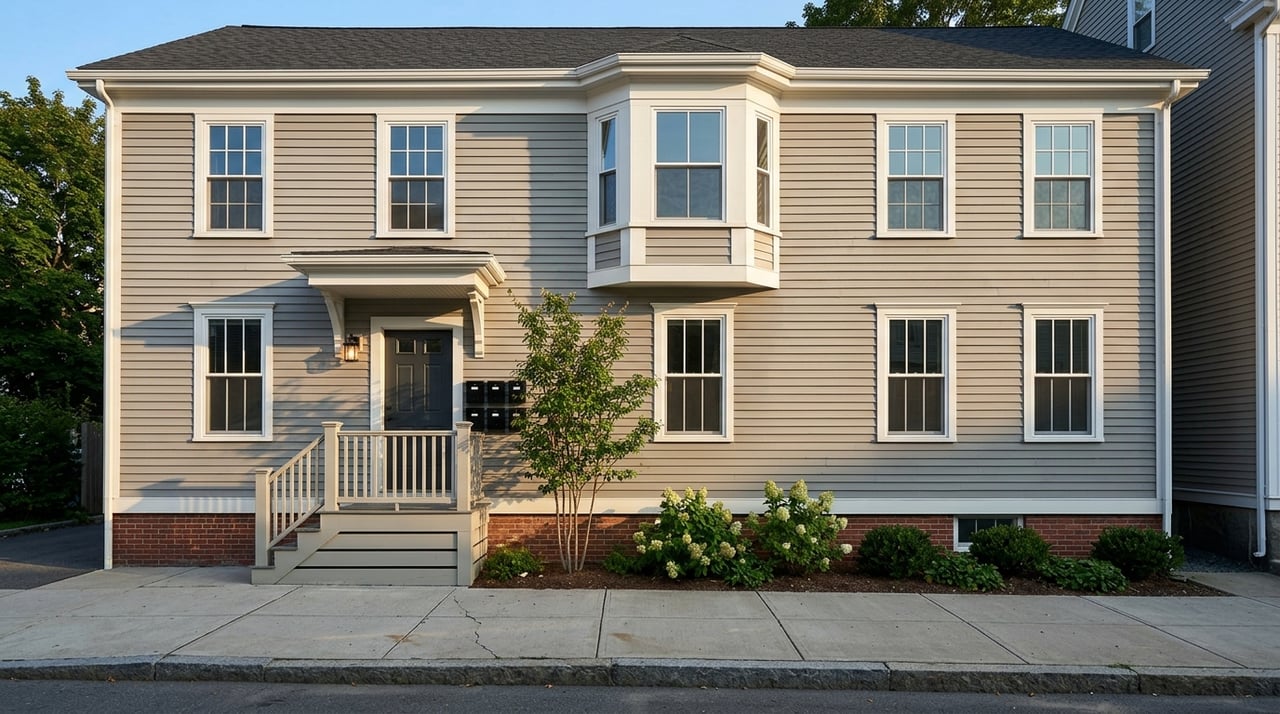
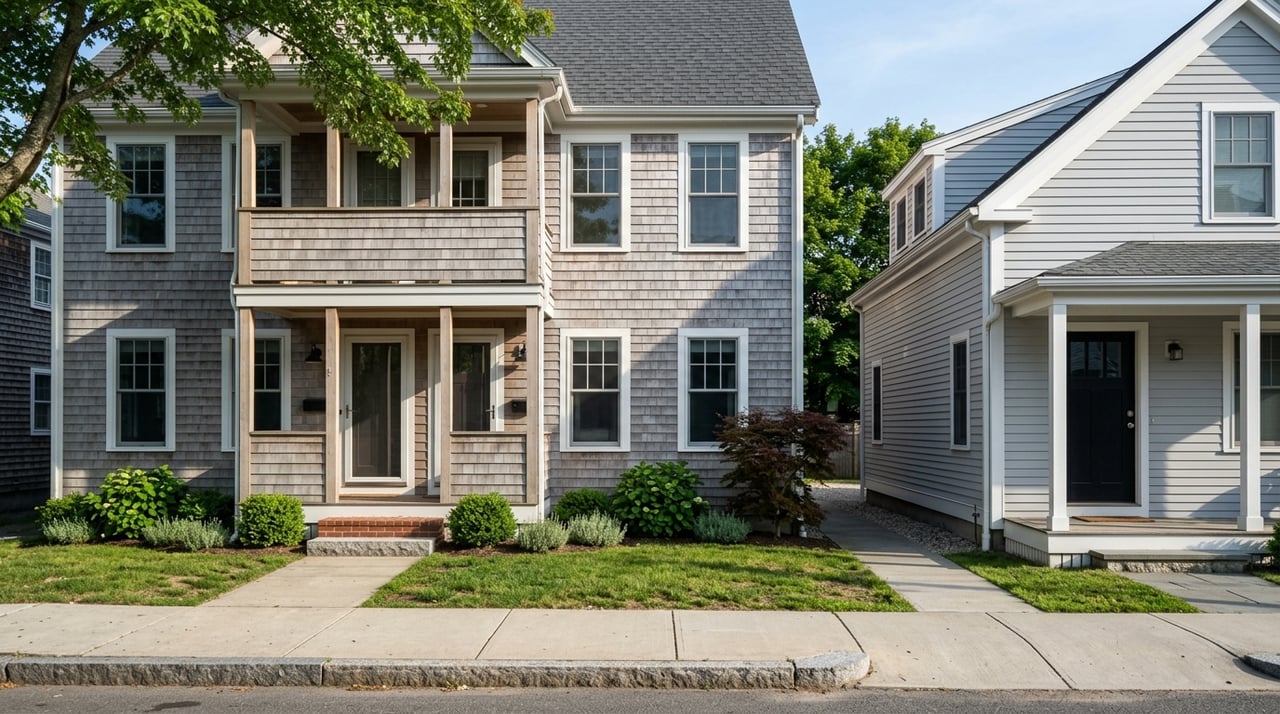
Small multifamily offers something single-family cannot: more than one income stream. If one unit turns over, the whole property does not necessarily go dark. That income diversification is a big reason owner-occupants and small-portfolio investors keep chasing 2-4 unit buildings.
In Plymouth County, that can be especially appealing because the county sits in a region where the state identifies a shortage of rental and multifamily options. The Old Colony region is projected to need 9,300 additional homes over the next decade. Limited supply can support rental demand, even if it does not guarantee easy cash flow.
Massachusetts housing data also shows that small multifamily is not the dominant product type. About 57% of homes statewide are single-family, about 20% are 2-4 unit homes, and only 6% of newly permitted units in 2024 were in two-, three-, or four-unit buildings. In practical terms, small multifamily can be harder to find, which is part of why investors pay close attention when solid buildings hit the market.
Multifamily advantages in Plymouth County
- Multiple units can reduce income disruption from a vacancy
- Owner-occupants may get much better financing terms
- Rent from other units may help you qualify
- More room for value-add upside through renovations or improved management
- Better fit for buyers who want to house-hack or build a small portfolio
Multifamily tradeoffs in Plymouth County
- More tenant coordination and more operational work
- More turnover exposure across multiple units
- More repair categories and reserve needs
- Pure investment financing usually requires more equity
- Underwriting is more sensitive to actual achievable rents
Financing is where the gap gets real
If you are buying strictly as an investor, financing often tilts in favor of single-family. Freddie Mac’s general maximum LTV matrix allows up to 85% loan-to-value on a 1-unit investment property, but only 75% on a 2- to 4-unit investment property. That means a non-owner-occupied multifamily purchase usually requires a larger down payment.
That higher equity requirement can change your strategy fast. In a high-cost county, tying up more cash in one asset may reduce your flexibility for reserves, repairs, or your next purchase. For many pure investors, that is one reason single-family feels easier to enter.
Owner-occupied multifamily changes the math
The story shifts if you plan to live in one unit. Fannie Mae’s 2023 policy update allows a buyer purchasing a triplex as a primary residence to use 5% down, and Freddie Mac shows 95% LTV for 2-unit, 3-unit, and 4-unit principal residences under standard automated underwriting. FHA also allows down payments as low as 3.5% on 1-4 unit properties.
That is a major reason house-hacking remains attractive. If you can occupy one unit, a small multifamily can become far more accessible than many buyers expect. In Plymouth County, where prices are high, that financing advantage can be the deciding factor.
Rental income helps, but lenders discount it
Lenders do not treat projected rent as dollar-for-dollar income. Fannie Mae uses 75% of gross rent when calculating net rental income for a 2-4 unit primary residence. FHA also applies a self-sufficiency test for 3-4 unit properties, subtracting the greater of estimated vacancy and maintenance or 25% of fair market rent.
This is important because it affects how much property you can actually buy. A building may look affordable on paper, but if the underwritten rents come in light, your loan approval may not match your expectations. That is especially true in a county with multiple rent submarkets.
Cash flow versus control
Single-family and multifamily are not just different property types. They are different operating models. With a single-family rental, you give up some income diversification in exchange for simplicity and easier management.
With multifamily, you gain more levers to pull. You may be able to improve income with unit turns, better rent positioning, or strategic renovation. But you also take on more coordination, more maintenance planning, and more tenant-facing issues.
For many Plymouth County investors, the best multifamily opportunities are not always the cleanest buildings. They are often properties with some combination of under-renovation, under-management, or pricing that creates room for improvement. That kind of deal can work well, but only if your underwriting is disciplined and your renovation plan is realistic.
A practical decision framework
If you are stuck between the two, use this simple lens.
Choose single-family if your priority is simplicity
Single-family often makes more sense if you want:
- A cleaner ownership experience
- Easier resale options
- Lower operational complexity
- A long-term hold based more on appreciation and loan paydown
- A pure investment purchase with less equity required than a 2-4 unit rental
Choose multifamily if your priority is leverage
Small multifamily often makes more sense if you want:
- To live in one unit and offset housing costs
- To count some rental income toward qualification
- Multiple income streams instead of one
- Value-add upside through renovation or management improvements
- A path to scaling a small portfolio over time
What matters most in Plymouth County underwriting
No matter which route you choose, your numbers need to reflect local reality. Plymouth County includes multiple submarkets, and municipal carrying costs can vary by town. Property taxes are set at the municipal level, so you should underwrite them town by town rather than making countywide assumptions.
You should also pay close attention to loan limits. FHFA set the 2026 baseline conforming loan limit at $832,750 and the high-cost ceiling at $1,249,125. Before writing an offer, verify the current county-specific limit so you know whether agency financing applies to your deal.
Most important, do not let broad demand trends replace deal-level analysis. The region needs more housing, and small multifamily supply remains limited, but that does not mean every property works. In Plymouth County, disciplined underwriting is what separates a good story from a good investment.
The bottom line
In Plymouth County, single-family usually wins on simplicity, while multifamily often wins on flexibility and income potential, especially if you plan to owner-occupy. Neither choice is automatically better. The right fit depends on your cash position, financing plan, tolerance for operational work, and whether you are buying for stability or for upside.
If you want a straightforward asset with a broad resale market, single-family may be the better fit. If you are comfortable with more moving parts and want to use owner-occupied financing or a value-add strategy, small multifamily may offer the stronger long-term play.
When you are comparing opportunities in Plymouth County, the smartest move is to underwrite the town, the property type, and the financing path together. If you want help thinking through a single-family or multifamily purchase with a practical investor lens, connect with Zach Midwood.
FAQs
Is single-family or multifamily better for a first investment in Plymouth County?
- Single-family is usually better if you want a simpler first deal, while multifamily can be stronger if you plan to owner-occupy and use rental income to help offset costs.
Does multifamily financing in Plymouth County require a bigger down payment?
- Yes, if you are buying a 2-4 unit property strictly as an investment, financing usually requires more equity than a 1-unit investment property.
Can rental income help you qualify for a multifamily property in Plymouth County?
- Yes, but lenders generally count only a portion of projected rent, not the full amount.
Are rents the same across all Plymouth County towns?
- No, Plymouth County includes different rent geographies, so achievable rents and underwriting assumptions can vary significantly by town.
Is house-hacking a good strategy in Plymouth County?
- It can be, especially because owner-occupied financing for 2-4 unit properties is often much more favorable than financing for non-owner-occupied multifamily purchases.
Why can cash flow feel tight in Plymouth County investment properties?
- Home prices are relatively high compared with rents, which can compress returns and make immediate cash flow harder to achieve without a strong purchase price or value-add plan.