If you are home shopping in Marion, one street can feel completely different from the next. A harbor-edge house, a compact village home, and an inland property may all share the same town name, but they offer very different daily routines. This guide breaks down how Marion’s harbor and village homes differ, what those differences mean for you as a buyer, and what to pay attention to before you make a move. Let’s dive in.
How Marion Is Laid Out
Marion is a small seaside town on the west side of Buzzards Bay in Plymouth County. It covers about 14.13 square miles of land and had 5,347 residents in the 2020 Census, with a 2025 estimate of 5,366. Town materials describe it as a picturesque seaside village, which fits the way many buyers first experience it.
The town’s survey plan divides Marion into five broad areas: Marion Village, Old Landing, South Marion, East Marion or Great Neck, and North or West Marion. For most buyers comparing harbor and village homes, the biggest differences come down to Marion Village and Old Landing versus the more inland sections. In practical terms, that means street pattern, house age, lot layout, and day-to-day convenience often matter more than the mailing address alone.
What Defines Harbor Homes
Harbor areas have the oldest maritime setting
If you are looking near Front Street, Water Street, or other harbor-adjacent blocks, you are shopping in Marion’s most maritime part of town. Old Landing, along the northern portion of the village near Front Street, contains several late-18th-century buildings, though most homes there were built in the first half of the 19th century. Many of the first owners were seamen, which helps explain the area’s strong coastal character.
As Marion changed from a maritime economy to a rail-era resort town, some of these properties shifted into summer use. Others were tied to Tabor Academy, and a few took on commercial or boatyard functions. That history created a more linear harbor-edge streetscape rather than the deeper suburban block pattern you might see farther inland.
Water Street reflects resort-era Marion
The Water Street area has some of Marion’s most notable older summer-house architecture. Town records note that this waterfront section was once largely uninhabited and used for salt works before larger summer cottages arrived in the late 19th century. If you are drawn to classic coastal New England architecture, this is one of the strongest places in town to find it.
Architectural styles identified in town materials include Shingle Style, Queen Anne, and Colonial Revival. The area is closely tied to visible proximity to Sippican Harbor, and some homes occupy elevated sites with broad harbor outlooks. Buyers often look here for maritime setting, period design, and a clear connection to the waterfront.
What Defines Village Homes
Marion Village has the tightest street grid
Marion Village is the town’s largest and most important settlement cluster. It sits west of Sippican Harbor and developed as a small, dense grid centered on Main Street, with Front Street and connecting side streets filling in the pattern. If you want the most naturally walkable part of Marion, this is the area most closely tied to that lifestyle.
Town survey materials describe the village as an exceptionally well-preserved harbor village with public buildings, stores and workplaces, and homes that range from the 18th through the 20th centuries. Front Street includes one of Marion’s commercial areas, while the surrounding housing stock is generally compact and visually consistent. That makes the village feel different from the more spread-out residential sections elsewhere in town.
Village homes are typically smaller and older
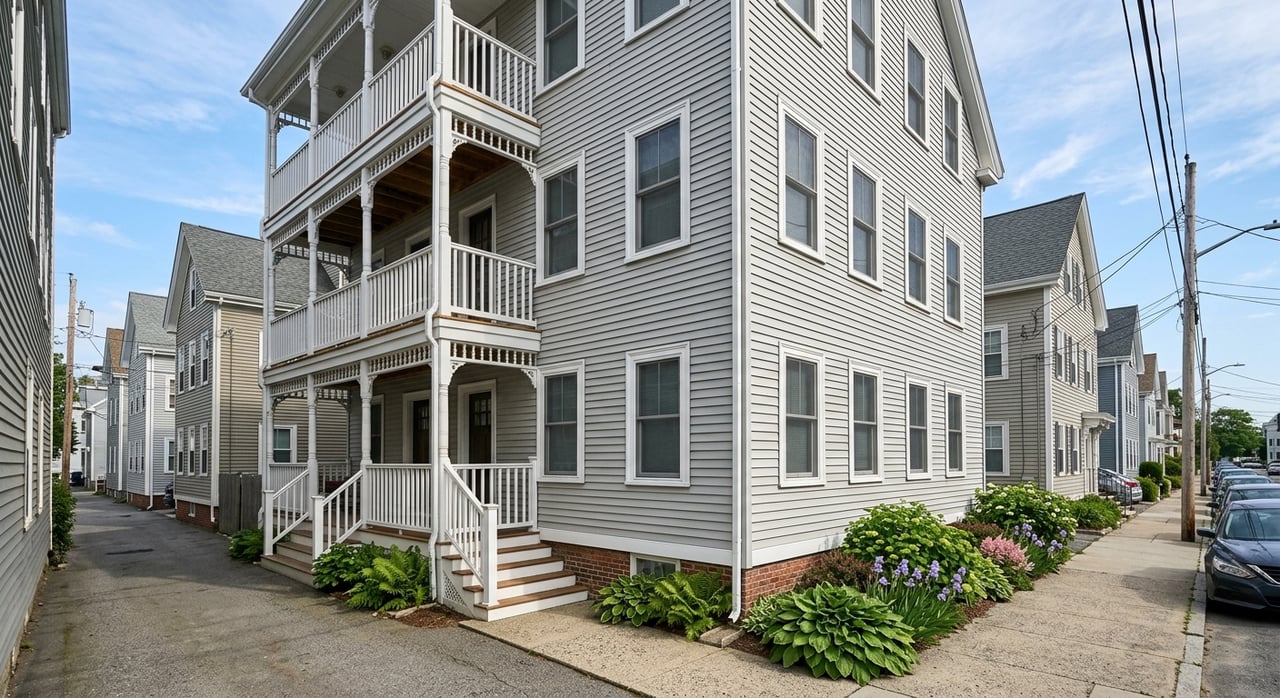
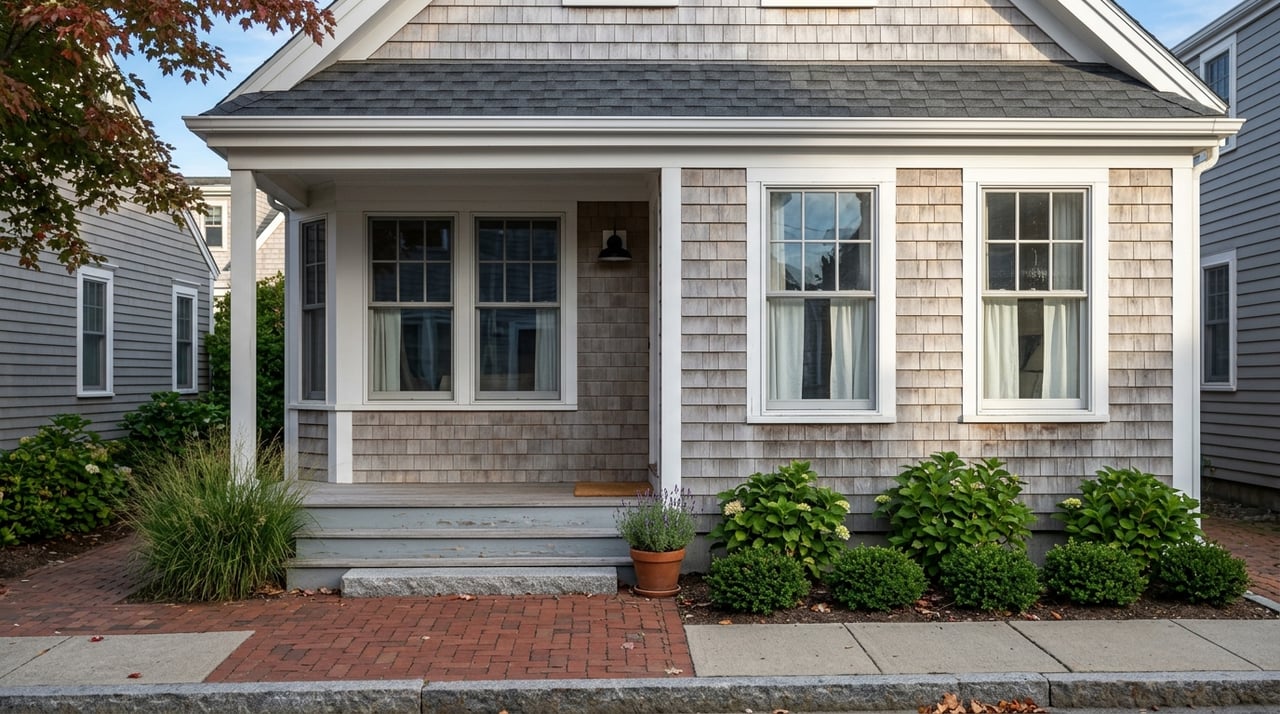
The village core leans historic rather than modern. Across the area, town inventories point to Federal and Greek Revival houses, along with later Queen Anne and Colonial Revival examples. You will also see Capes, ell houses, end houses, and picturesque cottages throughout the village fabric.
Most village homes are not estate-scale properties. Instead, the typical pattern is smaller to mid-sized dwellings with wood shingles or clapboards on comparatively modest lots. For buyers, that often translates into charm, older-house detail, and a closer relationship to the street.
Harbor Homes vs Village Homes
The daily experience is different
Harbor homes and village homes can overlap geographically, but they do not always feel the same in daily use. Harbor-adjacent homes tend to emphasize water proximity, maritime history, and a stronger visual connection to Sippican Harbor. Village homes tend to emphasize compact blocks, proximity to civic spaces, and a more walkable everyday rhythm.
If your priority is stepping into a classic harbor setting, the Front Street and Water Street areas may feel like the strongest fit. If your priority is being close to the town’s civic and cultural core, Marion Village often stands out. Neither is better in a universal sense. It depends on how you want to live.
Use this quick comparison
| Feature | Harbor Homes | Village Homes |
|---|---|---|
| Typical setting | Along harbor-edge streets like Front Street and Water Street | Grid of streets centered on Main Street and nearby cross streets |
| Common housing character | Maritime-era homes and resort-era summer cottages | Compact historic homes and cottages |
| Typical architecture | Shingle Style, Queen Anne, Colonial Revival, older seamen’s houses | Federal, Greek Revival, Queen Anne, Colonial Revival, Capes |
| Street pattern | More linear and water-oriented | Denser and more connected |
| Lifestyle feel | Strong water connection and historic coastal character | Most walkable part of town |
What Supports Village Living
Civic and public spaces are close by
One reason village living stands out is the concentration of public and community spaces. Town information places a downtown park across from the Town House and the Marion Arts Center, where events and parade viewing take place. That kind of central civic fabric is part of what gives the village its everyday convenience.
The same town resources place the Town Hall and the Library and Natural History Museum on Spring Street within the broader village setting. If you value being near public buildings and shared community spaces, the village has the strongest concentration of them. This is one of the clearest functional differences between village homes and more dispersed parts of Marion.
Silvershell Beach adds to the village appeal
Silvershell Beach sits at the end of Front Street along Sippican Harbor. According to the town parks page, it includes fields, a playground, a beach house, and a seasonal snack shack. For buyers comparing parts of Marion, that adds another layer to village and harbor living near the center of town.
This does not mean every nearby home has the same experience or access pattern. It does mean that homes in and around the village core tend to sit closest to several of Marion’s well-known public amenities. That can shape how often you drive versus walk for daily routines or seasonal recreation.
What to Know Before Buying Near the Harbor
Flood-zone review should happen early
If you are looking close to the harbor or tidal water, flood-zone review should be part of your normal search process. Marion’s updated FEMA flood insurance rate maps became effective on July 17, 2012. The town notes that special flood hazard areas are the zones where floodplain regulations apply and where mandatory flood insurance purchase can come into play.
This is not something to leave until the final stages of a transaction. Early review can help you understand how a property fits your budget and risk tolerance before you get too far into the process. In coastal towns, practical due diligence matters just as much as curb appeal.
Mooring access should be verified separately
Some buyers assume a harbor-oriented home automatically solves every boating question. In Marion, that is not a safe assumption. The town states that the Harbormaster administers mooring applications and the wait list for Marion waters.
If a mooring matters to you, verify the details separately and early. A home’s location near the water does not automatically mean a mooring is available, transferable, or immediate. That is a key distinction for buyers planning around boating access.
When Inland Marion May Fit Better
More space often means less walkability
Not every buyer wants to live in the village core or near the harbor. North and West Marion are the inland sections beyond Route 6 and much of Route 195, and town survey materials describe them as more sparsely settled than the waterside neighborhoods. These areas include more conservation-restricted land and road networks shaped by larger through routes instead of a tight village grid.
For you, that usually means a more car-dependent routine and less everyday walkability. It can also mean a different sense of space, privacy, and lot layout. Buyers who prefer room to spread out often find that tradeoff worthwhile.
Housing patterns are more suburban
Marion’s postwar growth introduced suburban-style enclaves with curving loop roads and former large parcels divided into newer residential streets. The town survey identifies several large developments, including Piney Point and other clusters off Point Road, Delano Road, and the interior area between Route 6 and Pleasant Street. This is where later construction and more standardized neighborhood layouts are more common.
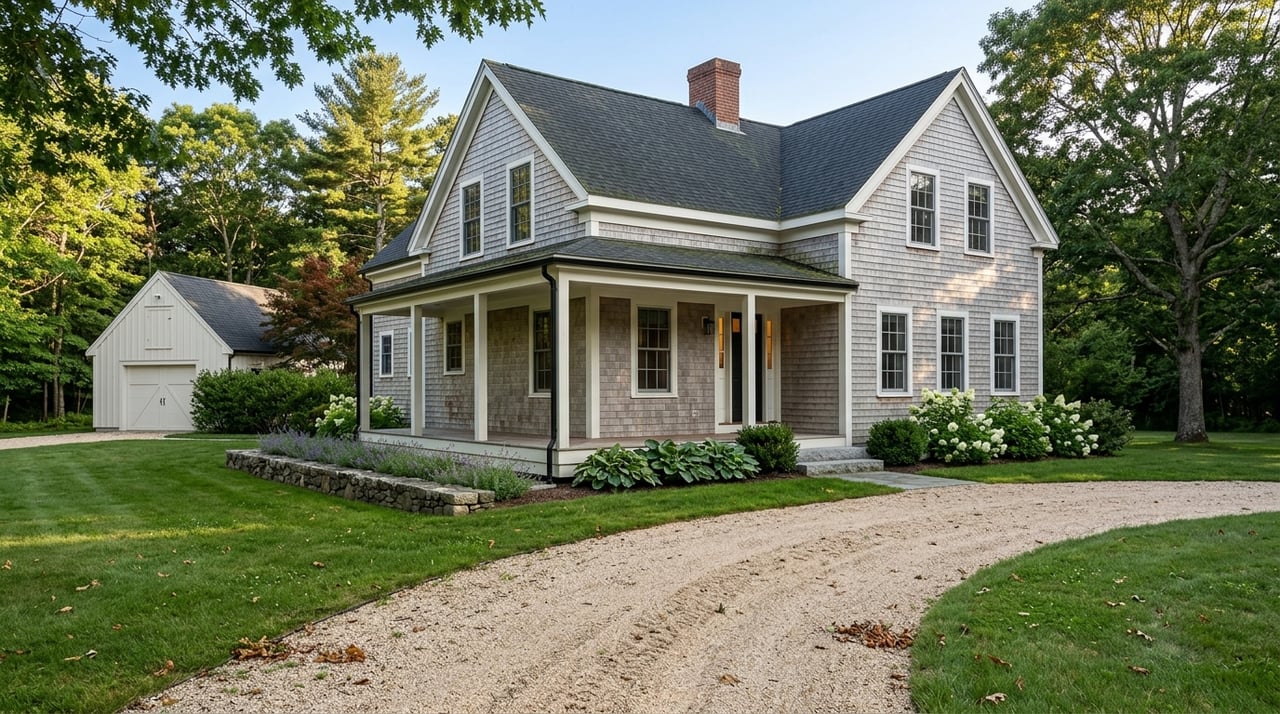
The broader 20th-century housing stock in Marion includes bungalows, foursquares, modern Capes, center-entry colonials, ranches, and other postwar forms. If you want more yard space, easier parking, or a layout that feels less tied to an older village pattern, inland Marion may deserve a close look.
How to Choose the Right Marion Fit
Choose based on routine, not just style
It is easy to fall in love with a facade in Marion. The better long-term move is to match the home to your daily habits. If you want the most walkable setting, with the closest access to town buildings and small commercial uses, Marion Village or Old Landing may be the right place to focus.
If you want the strongest maritime feel, older seamen’s houses, resort-era summer cottages, and the most visible connection to Sippican Harbor, harbor-adjacent Front Street and Water Street deserve attention. If you want more space, newer housing stock, and a quieter, more car-oriented setting, inland and newer subdivision areas may line up better with your priorities.
A local, practical approach helps
In a town like Marion, small location differences can have a big effect on value, upkeep, insurance questions, and daily convenience. That is why it helps to evaluate each property with a practical lens, especially when you are comparing historic homes, waterfront-influenced locations, and later suburban-style inventory. The right choice is usually the one that fits both your lifestyle and the realities of ownership.
If you want help sorting through Marion’s harbor, village, or inland options, Zach Midwood can help you evaluate the tradeoffs and move forward with a clear plan.
FAQs
What is the difference between Marion harbor homes and Marion village homes?
- Harbor homes are typically closer to Front Street or Water Street and have a stronger water-oriented, maritime setting, while village homes are usually part of the compact street grid around Main Street and the civic core.
Are Marion Village homes more walkable than inland Marion homes?
- Yes. Town survey materials identify Marion Village as the most compact and connected part of town, while inland areas are more dispersed and generally more car-dependent.
What housing styles are common in Marion Village?
- Common village styles include Federal, Greek Revival, Queen Anne, Colonial Revival, Capes, ell houses, end houses, and cottages.
What should buyers check before buying a harbor-area home in Marion?
- Buyers should review flood-zone information early and verify mooring details separately through the town, especially for properties near the harbor or tidal water.
Are there newer homes in Marion outside the village core?
- Yes. Inland Marion includes postwar and suburban-style development patterns with homes such as ranches, modern Capes, center-entry colonials, bungalows, and foursquares.